
Technology
Solo ET Powerful Future of Solo Empowered Technology

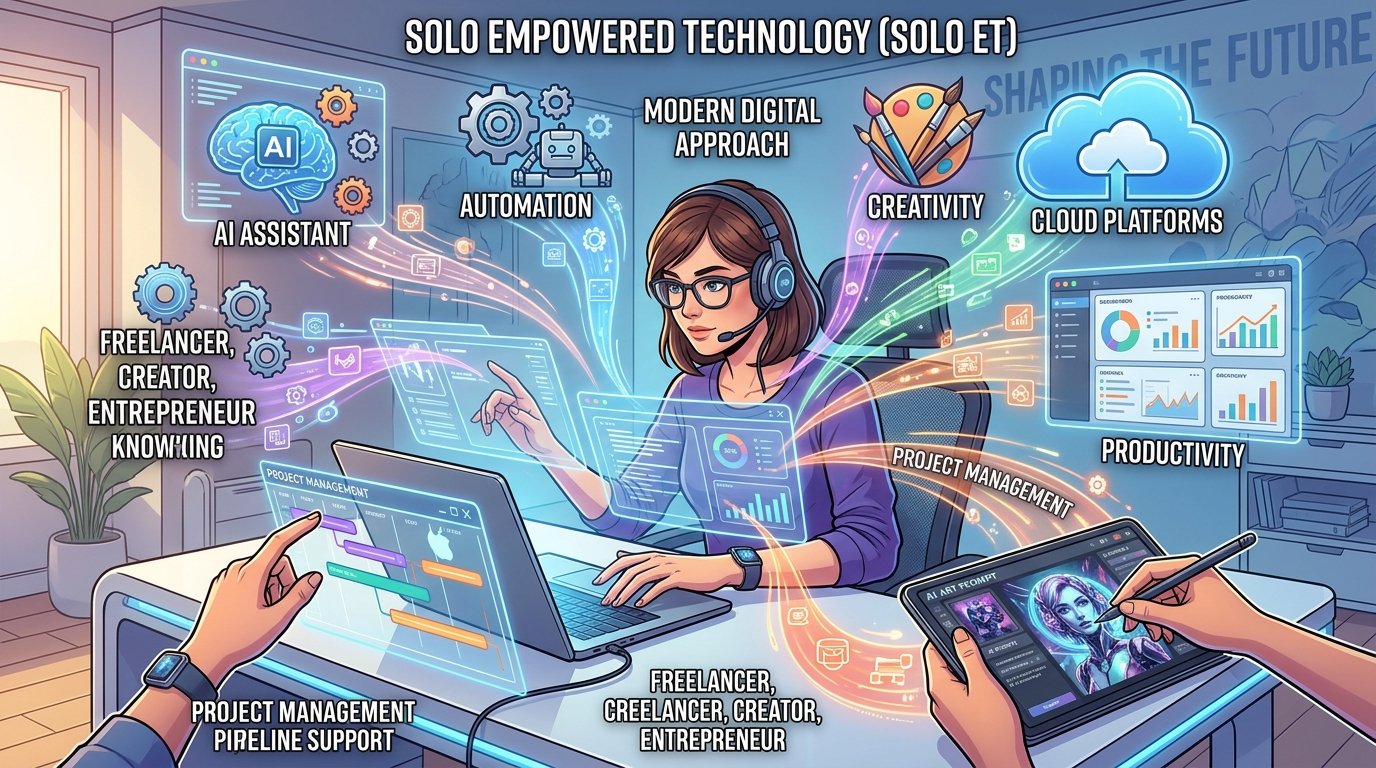
Solo Empowered Technology (Solo ET) is a modern digital approach that enables individuals to work, create, and manage projects independently using tools like artificial intelligence, automation, and cloud platforms. It expands what a single person can accomplish by automating repetitive tasks and providing intelligent support for creativity, productivity, and learning. Solo ET is widely used by freelancers, creators, and digital entrepreneurs to run businesses, produce content, and make decisions quickly without large teams. As technology advances, it continues to shape the future of independent work and the creator economy.
The main benefits of Solo ET include increased autonomy, faster decision-making, and significantly lower operational costs. It allows one person to manage complex projects that previously required entire departments. The main uses of Solo ET span from independent content creation and freelance consulting to digital entrepreneurship and personalized education. Its main components consist of individual-focused design, integrated automation systems, and self-managed workflows. Understanding Solo ET is not about following a trend; it is about recognizing a shift in how modern businesses build value in a crowded digital world.
Meaning and Core Concept of Solo Empowered Technology
Solo Empowered Technology (Solo ET) is a group of digital tools and systems designed to enhance the capabilities of individuals. In this model, the individual becomes the main operator of technology rather than just a user within a larger organizational system. The core purpose of Solo ET is to expand what one person can achieve by providing intelligent tools that assist with thinking, creating, and managing.
There are 4 primary roles that Solo ET plays in a professional’s life:
-
Personal Assistant: Organizes tasks and manages complex schedules.
-
Creative Studio: Enables high-quality graphic design, video production, and content writing.
-
Learning System: Provides AI-powered tutors and adaptive knowledge platforms.
-
Productivity Engine: Tracks goals and automates repetitive administrative work.
It treats technology as an extension of human capability. Instead of replacing human effort, it improves it. Smart systems handle repetitive tasks, which allows creators to focus on intentional design and independent thinking.
Origin and Evolution of Solo ET
The origin of Solo ET traces back to the rise of individualism in the early 20th century, but it evolved through 3 distinct technological phases.
-
The Early Internet Era: Personal computers allowed people to perform basic office work independently using spreadsheets and word processors.
-
The Cloud Decade (2005–2015): The rise of cloud infrastructure enabled remote work and global distribution platforms, allowing individuals to store files and collaborate from anywhere.
-
The AI Revolution (2023–Present): The growth of artificial intelligence and automation tools introduced a new level of capability, enabling the modern Solo ET ecosystem.
Global changes in 2020 accelerated this evolution as the pandemic pushed millions toward digital independence. Today, the internet amplifies individual voices, allowing the solo et approach to become a dominant business landscape.
Key Technologies That Power Solo ET
It relies on 5 main technologies to function effectively:
-
Artificial Intelligence (AI): Analyzes information and generates ideas to help individuals solve problems faster.
-
Automation Systems: Reduce time spent on repetitive tasks like data entry and communication management.
-
Cloud Computing: Provides access to powerful applications without the need for expensive hardware.
-
Mobile Applications: Ensure that tools are accessible from any location.
-
Real-time Data Analytics: Helps founders make informed decisions based on performance data.
These technologies work together to create a sustainable online footprint. By leveraging these tools, independent creators can maintain a focused value proposition without the digital overload common in large organizations.
Core Components of the Solo ET Ecosystem
The Solo ET ecosystem is built on a foundation of intentional simplicity. There are 4 core components that define this ecosystem:
-
Individual-Focused Design: Tools are built specifically for single users, which simplifies interfaces.
-
Personalized Interfaces: Systems learn from user behavior to adjust layouts and recommendations.
-
Integrated Platforms: Multiple apps connect to streamline workflows and reduce tool fragmentation.
-
Self-Managed Workflows: Users have full control over their own productivity systems and schedules.
This ecosystem encourages founders to focus on essentials. It provides clarity in a world saturated with complex software, ensuring that every tool added genuinely improves the user experience.
Solo ET vs Traditional Work Systems
It’s systems differ fundamentally from traditional work systems in terms of speed and structure. Traditional systems depend on large teams, departments, and hierarchical structures.
| Aspect | Traditional Work System | Solo ET System |
| Decision Making | Complex multi-layer processes | Streamlined, clarity-driven choices |
| Product Development | Multiple features launched by teams | Focus on one refined core product |
| Team Structure | Large teams with divided roles | Small digital teams or individuals |
| Growth Model | Rapid expansion and scaling | Sustainable, intentional growth |
It is not about doing less work; it is about directing effort more precisely. While traditional systems focus on collaboration, Solo ET focuses on empowering the individual to operate with the efficiency of a full company.
Economic and Social Impact of Solo ET
It is influencing the global digital economy by democratizing access to powerful resources. One major effect is the growth of solo businesses and the rise of the creator economy. Technology allows micro-entrepreneurs to reach global markets without the need for large investments or investors.
Socially, it contributes to the rise of digital nomads. Individuals can travel while working remotely, maintaining a conscious digital presence. However, this shift also sparks discussions regarding individualism versus collectivism. While it empowers personal autonomy, it requires a balance to ensure that community ties remain strong. It promotes authentic living on one’s own terms, shifting the focus from external validation to personal fulfillment.
How to Start Using Solo ET in Daily Life
To start using it, you must first define your personal goals. Identifying what you want to achieve helps you select the right tools without becoming overwhelmed.
Follow these 4 steps to adopt a Solo ET mindset:
-
Identify Essential Tools: Choose 2 or 3 apps that support your primary productivity or creative needs.
-
Build Simple Workflows: Create a step-by-step process for your daily tasks to ensure clarity.
-
Automate Repetitive Tasks: Use automation tools for scheduling and basic communication to save time.
-
Track and Refine: Monitor your progress and remove any tools that do not add clear value.
Starting small allows you to build a strong foundation. Responsible use of technology ensures that your systems remain sustainable and do not lead to digital burnout.
(FAQs) Frequently Asked Questions
What does Solo ET mean?
It stands for Solo Empowered Technology (SET) or Solo Experience Technology. It refers to digital tools and systems that help individuals work, learn, and create independently using automation and AI.
Who can benefit from Solo ET?
Freelancers, startups, and independent creators benefit most from Solo ET. It is also useful for students and developers who want to increase their personal productivity and manage projects without a large team.
Is Solo ET expensive to implement?
No, it is often more affordable than traditional systems. Many tools are available for a low monthly cost or have free versions, allowing founders to build a professional brand identity with minimal investment.
Does Solo ET discourage collaboration?
No, it emphasizes independent thinking but does not prevent collaboration. It focuses on building individual capability first, so that when you do work with others, you bring a clearer brand message and more focused priorities to the table.
You describe your game idea, generate it, and test the controls. The character moves and jumps, but everything feels delayed or stiff. Taps or key presses take a split second too long to register, jumps fall short or overshoot, and turning feels sluggish. Players notice immediately, they mash buttons in frustration, miss easy actions, and quit after 20 seconds. This unresponsive feel comes from basic descriptions that do not specify timing, momentum, or device differences. The tool uses safe defaults, but they rarely match the snappy response players expect. Responsive controls make games addictive: inputs are triggered instantly, movement flows naturally, and actions are met with feedback.
You fix it by refining your description with exact details on response time, physics feel, input mapping, and polish. Update one aspect, generate again, play on phone and keyboard, adjust. On the AI game maker online platform, like Astrocade, you can regenerate fast for quick tests. Most creators make controls feel great after 4-6 tweaks. This guide shows why responsiveness lags and gives step-by-step refinements for platformers, runners, and shooters. Your game will go from frustrating to fluid, keeping players hooked.
Why Controls in Generated Games Often Feel Sluggish
Basic descriptions like make a jumper with tap to jump create functional but unpolished input. The tool adds average delay (0.1-0.2 seconds), generic momentum, and uniform sensitivity. On phones, finger taps compete with palm rests; on keyboards, repeated presses lag. Physics default to floaty or heavy without weight. No feedback means players guess if the input was registered. Result: actions feel disconnected, tap, wait, react. Players fight the game, not enjoy it. Responsive means zero perceived lag, natural weight, and confirming feedback. Refine by describing exact timing and feel upfront.
Map Inputs Precisely for Instant Response
Nothing kills momentum like fumbling controls, unclear inputs lead to missed jumps and rage-quits. Spell out every action crystal-clear in your prompt, covering taps vs. holds and multi-touch. Tailor to devices too: “Tap left screen half to move left, right half to right, center to jump, hold center for higher leap. Keyboard echo: “A/D moves, space jumps (hold for charged).
We tried this for Desert Terror. Raw version had vague swipes causing sand dune wipeouts; refined to split-screen taps (left/right move, bottom-center dodge-roll, top-center dune-slide hold), plus keyboard WASD + shift. Players nailed precise terror dodges in dunes, boosting completion rates, no more “what button?” frustration.
Here are input refinements for responsiveness:
- Tap registers in 0.05 seconds max, no minimum hold time.
- Separate zones: bottom 30% swipe left/right, top 70% tap actions.
- Keyboard instant: arrow keys nudge 5 units/frame, space full jump.
- Ignore palm swipes: only single-finger inputs count.
Generate, test 50 taps, count misses. Zero perceived delay builds trust.
Tune Physics and Momentum for Natural Movement
Stiff physics break the flow. Refine gravity, friction, and bounce for a weighty yet agile feel. Medium gravity pulls down smoothly over 0.5 seconds, and friction slows the run to stop in 1 second. Jumps arc with forward carry, land squash 10% scale.
Here are physics tweaks for responsive handling:
- Gravity 80% earth standard, air resistance light for controlled glides.
- Momentum preserves: wall slide on hold, dash builds speed over 0.3 seconds.
- Bounce on land: 20% height return, dust puff confirms.
- Collision forgiving: 5 pixel overlap before damage.
Play runs/jumps, feels grounded? Adjust values until intuitive.
Layer Feedback by AI Maker to Confirm Every Action
Silent inputs confuse. Add visual/audio cues so players know input worked. Glow under finger on hover, ripple on tap. Jump trail fades behind.
Here are feedback layers for confirmation:
- Visual pop: scale input area 120% on press, ease back.
- Sound sync: whoosh starts on tap, peaks mid-jump.
- Haptic: short buzz on land/collect (mobile).
- UI tick: brief score pulse on success.
Test blind: close eyes, tap, hear/feel response? Layers make controls reliable.
Optimize for Devices and Balance Sensitivity of Game
Phone vs keyboard needs separate handling. Describe both. Mobile: larger zones (60px min), variable sensitivity for thumb size. Desktop: precise pixel nudges.
Here are device balances:
- Mobile portrait priority, auto-scale UI 150%.
- Sensitivity slider hidden, default medium for casual play.
- Edge ignore: 10% screen border, no input.
- Adaptive: speed up if fast taps are detected.
Test cross-device: phone thumb play, keyboard precise. Unified feel across.
Test Responsiveness Through Intense Play
True test in chaos: crowded sections, fast combos.
Routine:
- Play 10 minutes of high action, count input fails.
- Record screen, review lags frame-by-frame.
- Friend test: different devices, note complaints.
- Benchmark: 100 jumps, measure consistency.
Regenerate tweaks, compare videos. Aim for a sub-50ms feel.
Example of Responsive Controls Done Right
Among Us The Skeld shines with mobile-first controls. Tasks swipe smoothly, movement nudges precisely, impostor kills haptic punch. Taps register instantly, no misfires.
Wrap Up Refine to Responsive Perfection
Responsive controls from precise mapping, tuned physics, confirming feedback, device balance, and intense tests. Describe exactly, iterate plays. Your game: pick sluggish action, refine input/physics. Generate, test chaos. Fluidity transforms play.

Telemetryczny refers to telemetric technology that automatically collects, transmits, and analyzes data from remote systems using sensors and wireless communication. It enables organizations to monitor assets in real time without physical presence. A typical telemetryczny system includes sensors for data acquisition, transmitters that send information through networks like 5G or satellite, and centralized platforms that analyze and visualize the data. Widely used in industries such as aerospace, logistics, healthcare, energy, and agriculture, telemetryczny improves operational efficiency, supports predictive maintenance, and allows safer monitoring of remote or hazardous environments.
The main benefits of a telemetryczny system include increased operational efficiency, predictive maintenance (PdM), and significant cost reduction. By utilizing wireless communication and IoT (Internet of Things) protocols, these systems allow for continuous remote monitoring of assets in hard-to-reach or hazardous environments. This proactive approach enables data-driven decisions that prevent system failures before they occur.
Primary uses of telemetryczny technology span across several critical industries:
-
Aerospace and Defense: Monitoring flight diagnostics and missile trajectories.
-
Logistics and Fleet Management: Optimizing routes and tracking vehicle health in real time.
-
Energy Management: Balancing smart grids and monitoring industrial process control.
-
Healthcare: Tracking patient vitals through biometric data streaming.
A standard telemetryczny framework consists of three main parts:
-
Sensors: The hardware that performs Data Acquisition (DAQ) by measuring physical properties like temperature or pressure.
-
Transmitters: Components that facilitate data transmission via GSM, 5G, or satellite links.
-
Central Receiving Unit: Software platforms—often SaaS (Software as a Service) or Cloud Computing based—that perform data visualization and analysis.
The Invisible Network That Connects Everything
Imagine a world where a technician in Berlin can optimize the performance of a wind turbine in the North Sea without ever leaving their desk. This connectivity is the result of a telemetryczny network. These networks operate silently in the background, bridging the gap between physical hardware and digital analysis. By leveraging M2M (Machine to Machine) communication, telemetryczny creates a seamless flow of information that keeps smart city infrastructure and global supply chains moving. It is the silent force shaping modern online innovation and industrial reliability.
What is Telemetryczny?
Telemetryczny is an adjective describing technology used for remote measurement and the wireless transmission of data from a source to a receiving station. The term is derived from the Greek words tele (remote) and metron (measure). In a practical sense, a telemetryczny system pomiarowy (telemetric measurement system) captures specific data points—such as speed, vibration, or environmental pollution monitoring—and sends them to a server for systematic collection. This eliminates the need for manual readings and provides a constant stream of real-time data.
The Origins and Evolution of Telemetryczny
Telemetryczny technology has deep roots in the early 20th century, where it was primarily used for military intelligence and aerospace. During the mid-1900s, NASA utilized advanced telemetry to monitor spacecraft systems during missions. As radio transmission evolved into digital communication, the technology moved into the industrial sector via SCADA (Supervisory Control and Data Acquisition) systems.
Today, the evolution of telemetryczny is driven by the integration of AI (Artificial Intelligence) and 5G networks. We have moved from simple raw measurements to AI-driven insights that offer contextual awareness. The modern telemetryczny hub now processes Big Data at the edge, allowing for instantaneous embedded system diagnostics.
Telemetryczny vs. Traditional Monitoring: A Clear Advantage
The transition from manual monitoring to a telemetryczny system represents a significant technological leap. Traditional methods rely on periodic, human-led inspections, which are often reactive. In contrast, telemetryczny systems offer continuous, automated oversight.
| Feature | Traditional Monitoring | Telemetryczny Systems |
| Data Frequency | Periodic/Manual | Real-time/Continuous |
| Response Type | Reactive | Proactive/Predictive |
| Accuracy | High human error risk | High precision sensors |
| Accessibility | Requires physical presence | Remote/Global access |
| Cost | High labor expenses | Lower long-term operational costs |
Transformative Applications Across Industries
Telemetryczny technology is indispensable across diverse sectors, each using it to solve specific logistical or technical challenges.
-
Logistics and Retail: Companies use telemetryczny monitoring pojazdów (vehicle monitoring) to optimize routes and manage fuel consumption. In retail, it tracks supply chain visibility to prevent stockouts.
-
Healthcare Telemetry: Hospitals use wearable sensors for biometric data streaming, allowing doctors to monitor patients with chronic conditions remotely.
-
Agriculture Telemetry: Smart sensors analyze soil moisture and weather patterns to provide agricultural yield forecasting, which helps in precision irrigation.
-
Environmental Monitoring: Remote sensors track air quality and geophysical event detection, providing early warnings for natural disasters.
Why Telemetryczny is Indispensable
There are 5 main reasons why telemetryczny is essential for modern enterprise:
-
Actionable Intelligence: It converts raw data into specific insights that guide strategy.
-
Predictive Failure Analysis: It identifies wear and tear in machinery before a breakdown happens, known as predictive maintenance.
-
Safety in Hazardous Zones: It allows for the monitoring of nuclear plants or deep-sea rigs without risking human lives.
-
Operational Efficiency: Automation reduces the time spent on data logging and manual reporting.
-
Regulatory Compliance: Detailed data logs provide a clear audit trail for industries like defense and pharmaceutical manufacturing.
Driving Innovation Through Telemetryczny
Innovation in the digital age relies on rapid iteration. Telemetryczny systems allow developers and engineers to see how products perform in the real world instantly. For example, Tex9.net and Serlig are concepts that emphasize the importance of connectivity in innovation. By using real-time pipeline insights, a SaaS company can detect bugs in its software before the user even encounters an error. This feedback loop, powered by telemetryczny, is what allows for the high-frequency trading analysis and surgical robot precision we see today.
Advantages and Disadvantages of Telemetryczny
While the technology offers massive potential, it requires a balanced implementation.
Advantages
-
Remote Asset Optimization: Manage global assets from a single central receiving unit.
-
Real-time Data Insights: Make decisions based on what is happening now, not what happened last week.
-
Scalability: Easily add thousands of sensors to a distributed system.
Disadvantages
-
Cybersecurity Risks: Transmitting data over wireless networks requires robust encryption to prevent data breaches.
-
Initial Setup Costs: High-quality urządzenia telemetryczne (telemetric devices) and integration can be expensive initially.
-
Data Overload: Without AI and Machine Learning (ML), the sheer volume of Big Data can be difficult for human operators to process.
Future of Telemetryczny: Integration, Intelligence, and Insight
The future of telemetryczny is defined by three major technological shifts:
-
Edge Computing: Processing data closer to the sensors to reduce latency.
-
AI Integration: Moving from monitoring to autonomous decision-making where the system fixes itself.
-
5G and 6G Connectivity: Providing the bandwidth for high-definition video telemetry and ultra-fast data transmission.
Concepts like Lufanest represent the new digital concepts shaping modern online innovation, where every device is part of a larger, intelligent ecosystem.
Embracing the Connected, Data-Driven Future
Telemetryczny has evolved from a niche aerospace tool into the backbone of the global economy. By transforming raw measurements into systematic collection and actionable intelligence, it enables a level of foresight previously impossible. Businesses that adopt telemetryczny systems will improve their operational efficiency and secure a competitive advantage in an increasingly complex world.
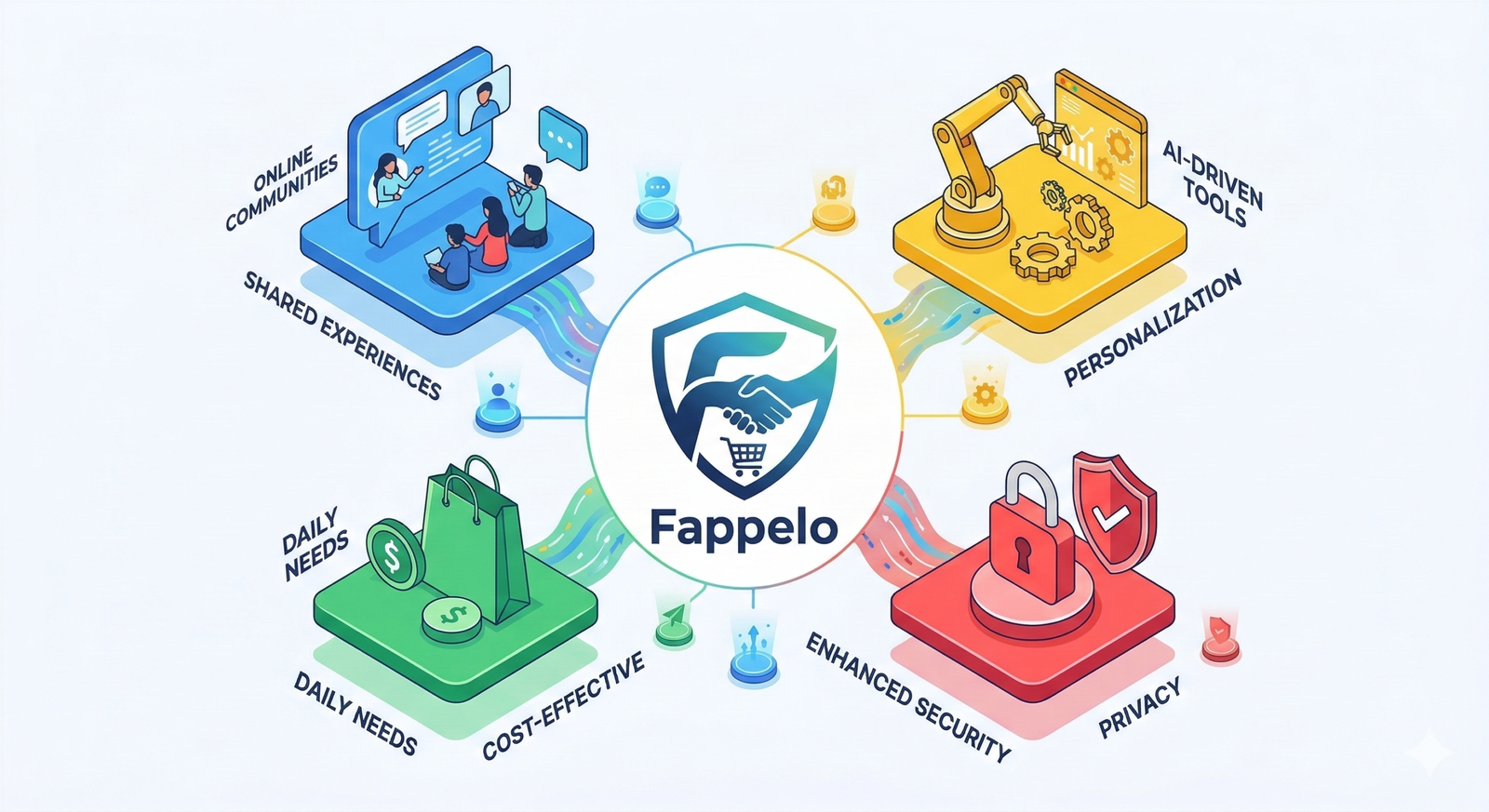
Fappelo is an AI-powered all-in-one platform that combines online communities, e-commerce, and productivity tools in one place. It helps users save time, access personalized deals, and connect with niche groups through customizable community spaces. With features like AI recommendations, event management, secure messaging, and privacy-focused security tools such as encryption and two-factor authentication, Fappelo creates a safer and more efficient digital environment for networking, shopping, and collaboration.
Fappelo is an all-in-one online platform designed to bridge the gap between daily convenience and vibrant online communities. This tool works by using Artificial Intelligence (AI) to streamline digital spaces and e-commerce, allowing users to manage household needs while engaging in shared experiences. The main benefits of Fappelo include significant time savings, cost-effective shopping solutions, and enhanced security for personal data. Users primarily utilize the platform for networking in niche groups, accessing personalized deals, and organizing remote work or social events. The main components of Fappelo are its AI-driven recommendation engine, customizable community spaces, and a secure e-commerce interface.
The Rise of Online Communities
Online communities (OC) have flourished recently as the digital landscape shifts toward shared interests and meaningful connections. These virtual hubs allow individuals to gather around passions ranging from gaming and arts to wellness and technology. The surge in remote work and digital interaction has turned these spaces into essential environments for social and professional growth.
What Makes Fappelo Different?
Fappelo stands out through its user-centric approach and seamless integration of AI-driven tools. Unlike traditional social media groups, it prioritizes a personalized experience by matching members with specific content and like-minded individuals. The platform uses algorithmic bias detection and fairness accountability transparency (FAT) frameworks to ensure inclusive algorithmic design. This focus on ethical AI governance creates a safer, more relevant environment for every User.
Features and Benefits of Using Fappelo
Fappelo offers 5 core features to enhance online engagement and community-building:
-
Customizable community spaces for unique branding.
-
Robust communication tools including live chats and polls.
-
Integrated multimedia options for easy content sharing.
-
Interactive event management for book clubs and entrepreneurs.
-
Personalized profile settings to highlight individual expertise.
Convenience and Time-Saving Benefits
Fappelo reduces the time spent on daily tasks by consolidating shopping and networking into one interface. This efficiency comes from 3 main factors: automated grocery list generation, scheduled service deliveries, and quick-access community notifications. You can save approximately 5 hours (300 minutes) per week by using these streamlined tools. Manage your schedule better, if your daily routine becomes overwhelming.
Cost-Effective Solutions
Fappelo provides cost-effective solutions by leveraging partnerships with vendors and offering exclusive discounts. There are 4 primary ways to save money on the platform:
-
Bulk-buy deals for household items.
-
Promotional offers from integrated Shopify and Dropshipping partners.
-
Subscription discounts for frequent service bookings.
-
Referral rewards for growing your community. These strategies help lower your Customer Acquisition Cost (CAC) and improve your personal budget.
Personalized Recommendations and Deals
Fappelo analyzes user behavior to provide 100% personalized recommendations and deals. The AI evaluates your past interactions in gaming forums or fitness groups to suggest products you actually need. This prevents “scrolling fatigue” and ensures that Social Media Marketing (SMM) efforts remain relevant to your lifestyle.
Enhanced Security and Privacy Features
Yes, Fappelo uses advanced encryption and Two-Factor Authentication (2FA) to protect user privacy. The platform implements data provenance tracking and model auditability standards to keep your information secure. Security Layers:
-
End-to-end encryption for private messaging.
-
Customizable privacy settings to control profile visibility.
-
Post-deployment monitoring to catch adversarial threats.
-
Transparent data policies that explain how your information is used.
Success Stories from Fappelo Users
Fappelo has helped thousands of members achieve their goals. Sarah used the platform to grow her local arts community to 1,000 members. Mike scaled his small business by using Fappelo’s SEO and Content Marketing tools to reach new customers. Jessica organized a global wellness retreat using the built-in event features. These success stories demonstrate how the platform fosters real-world results.
How to Get Started with Fappelo
To get started with Fappelo, follow these 4 steps:
-
Visit the official website or download the mobile app.
-
Create a profile by entering your basic information and interests.
-
Join 3 relevant communities to begin your online engagement.
-
Customize your settings to receive tailored notifications and deals.
-

 Entertainment1 month ago
هنتاوي.com Hub for Trending Arabic Content and Digital Stories
-
Others1 month ago
Insert Han Reference Here: The Veilside Fortune RX-7
-
Others1 month ago
Humble Celebrity: Ramon Bautista’s Lancer “Evo III”
-
Others1 month ago
Pure Rally Bred: Law’s Lancer Evolution VI Tommi Makinen Edition
-
Others1 month ago
Everyday Show Car: Henry’s Jaos Complete Edition Toyota FJ Cruiser
-
Others1 month ago
Seafoam Dreams: Julian’s OEM+ Nissan SilEighty
-

 Gaming1 month ago
Garforfans Ultimate Fan Hub for Gaming and Pop Culture
-

 Business1 month ago
PLG Supplies Trusted Industrial and Commercial Supply Partner